
Core Product Lines
Air Dielectric · Leaky Feeder · RF Feeder · PLMR Braided · D-FB Braided
Five core product lines covering base-station feeders, tunnel coverage and equipment interconnects. Select by impedance, construction and loss budget — a complete transmission chain in one place.
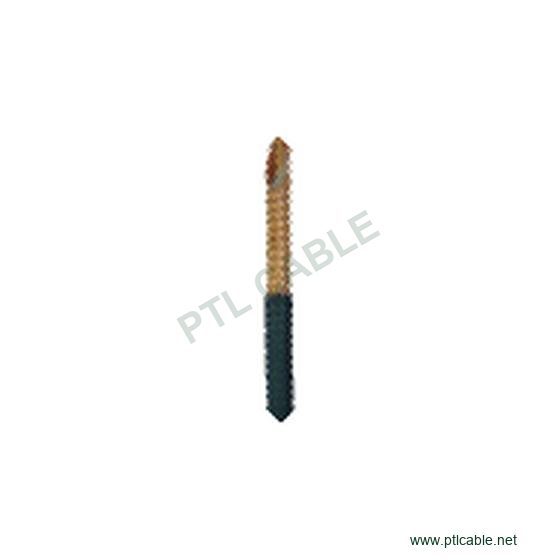
Air Dielectric Coaxial Cable
An air-dielectric construction places most of the field in air, minimizing dielectric loss and maximizing power handling. The ICA and SDY-50 families span 1/2″ to 3-1/8″ for long-run, high-power RF feeders.
View all models in this series →Representative models
| ICA12-50JPL | Standard 1/2″ air dielectric cable |
| ICA12-50JPLL | Ultra-low-loss type for long feeder runs |
| SDY-50-23-3 | 7/8″ air dielectric coaxial cable |
| SDY-50-40 | 1-5/8″ high-power trunk feeder |
Typical applications
- Macro base-station feeders
- Microwave relay & transmission
- Broadcast transmission
- Radar & test systems
Selection tips
- Size by power handling and loss budget
- Use ultra-low-loss for long runs
- Respect the minimum bend radius
Leaky Feeder Cable
Precision slots in the outer conductor let RF signal leak uniformly along the cable, combining transport and coverage in one run. Coupling (Z) and radiating (R) types span 1/2″ to 1-5/8″.
View all models in this series →Representative models
| HLCAY(Z)-50-12 | Coupling type 1/2″ leaky feeder |
| HLCTY(Z)-50-22 | Coupling type 7/8″ leaky feeder |
| HLCAY(R)-50-12 | Radiating type 1/2″ leaky feeder |
| HLHTY(R)-50-42 | Radiating type 1-5/8″ leaky feeder |
Typical applications
- Metro & railway tunnels
- Road tunnel coverage
- Mine & underground communication
- Large venue indoor coverage
Selection tips
- Coupling type for uniform continuous coverage
- Radiating type for higher gain and longer reach
- Select by operating band and coupling loss
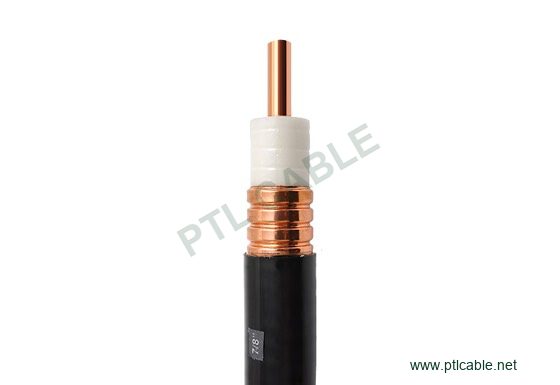
RF Corrugated Copper Feeder
50Ω corrugated copper coax — annular and spiral corrugation balance electrical performance with flexibility. The workhorse feeder for 4G/5G base stations, from 1/4″ to 1-5/8″.
View all models in this series →Representative models
| 1/2″ 环形波纹 (106) | 1/2″ annular corrugated feeder |
| 7/8″ 环形波纹 (108) | 7/8″ annular corrugated feeder |
| 7/8″ 低损耗 (109) | 7/8″ low-loss feeder |
| RF12Z | Carrier-grade 1/2″ feeder |
Typical applications
- 4G/5G base-station feeders
- Indoor distribution trunks
- Microwave transmission links
- RF test & measurement
Selection tips
- Super-flex spiral type for repeated bending
- Choose low-loss for long runs
- Use matched connectors to control VSWR
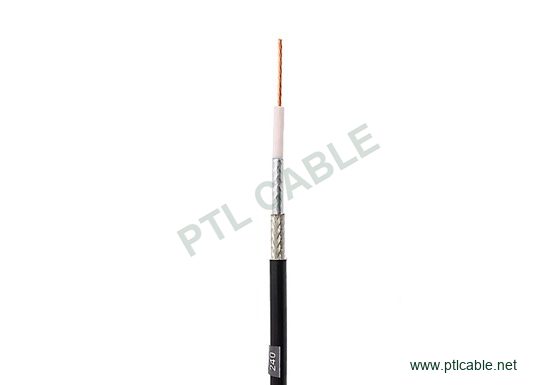
PLMR Low-Loss Braided Coaxial Cable
The PLMR series uses a braided outer conductor for low loss together with excellent flexibility and bend life — ideal for equipment interconnects and tight RF routing. PLMR and D-FB are separate series; do not interchange them.
View all models in this series →Representative models
| PLMR-100 | Slim low-loss braided cable |
| PLMR-240 | General-purpose low-loss braided cable |
| PLMR-400 | Medium/high-power low-loss braided cable |
| PLMR-600 | High-power low-loss braided cable |
Typical applications
- RF equipment interconnects
- RF module jumpers
- Test & measurement cables
- Vehicle & marine communications
Selection tips
- Select size by frequency and attenuation budget
- Braided construction outlasts corrugated tube under bending
- Select against D-FB by attenuation need — do not mix
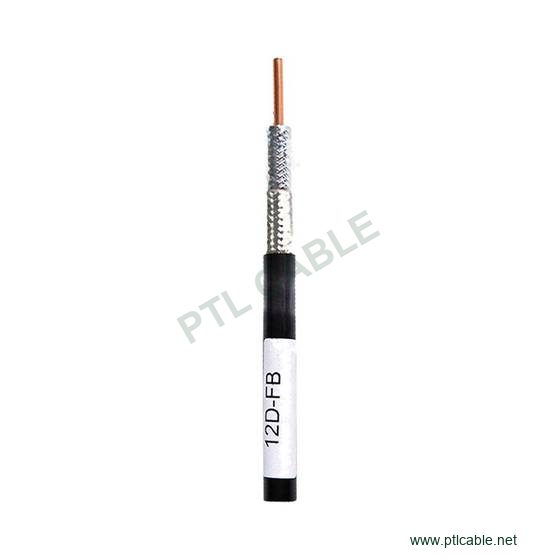
D-FB Braided Coaxial Cable
The D-FB series is a 50Ω braided coax with slim diameter and low loss, widely used for WLAN, GPS and wireless-device RF connections. Available from 3D to 12D-FB. D-FB and PLMR are separate families — select each by attenuation need.
View all models in this series →Representative models
| 3D-FB | Slimmest, for dense routing |
| 7D-FB | Popular balance of flexibility and loss |
| 10D-FB | Lower loss for medium runs |
| 12D-FB | Largest, lowest-loss in the D-FB family |
Typical applications
- WLAN / WiFi feeders
- GPS antenna feeders
- Wireless data & IoT
- Small cells & antennas
Selection tips
- Smaller diameter means more flexibility but higher loss
- Prefer low-loss models at high frequencies
- Select against PLMR by attenuation need — do not mix
Need help selecting for your project?
Tell us your frequency, power, length and environment — our engineers will recommend a model and quote.